A couple years back, I got a call from a homeowner in Meridian-Kessler. She said, "Every time I run the washing machine, the water in the shower turns ice cold — and sometimes brown. My plumber keeps patching leaks, but I'm tired of it." She was about ready to give up on her 1920s bungalow. Sound familiar? If you're dealing with random leaks, rusty water, or pressure that changes with every load of laundry, your pipes might be telling you something. Let's look at the seven signs that say it's time to consider a repipe in Indianapolis.
1. Frequent Leaks — The Patchwork Problem
If you've had three or four leaks in the past year — or you're calling a plumber every few months — you're not unlucky. Your piping system is failing. Galvanized steel pipes, common in homes built before the 1960s, rust from the inside out. Copper pipes from the 70s and 80s can develop pinhole leaks from corrosive water. And polybutylene, used in some homes in the 80s and 90s, is notorious for sudden failures. Instead of patching each new leak, a whole-home repipe stops the cycle for good.
2. Rusty or Brown Water
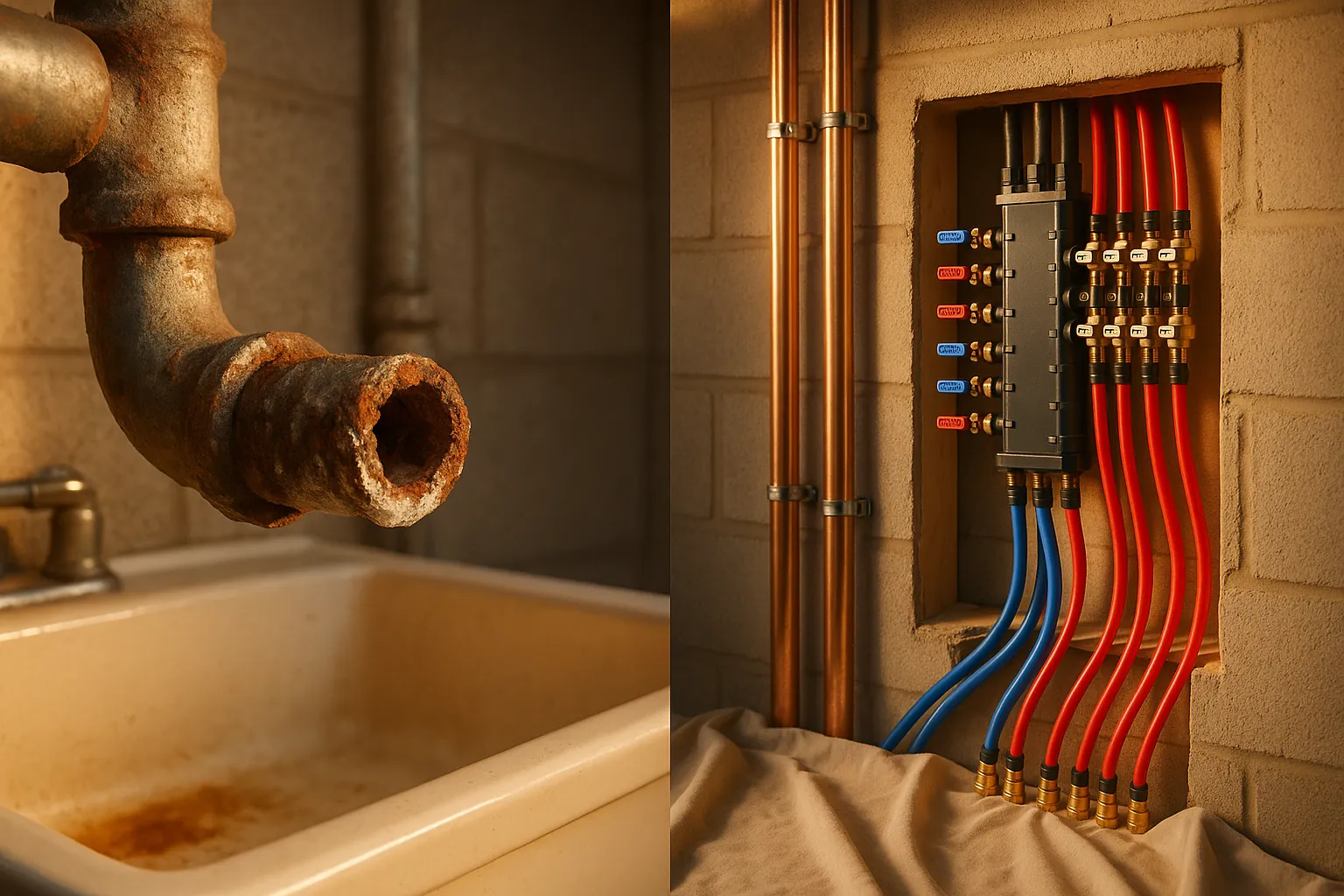
Turn on the tap. If the water comes out brown, yellow, or reddish — especially after a night of no use — that's rust from inside your pipes. It's not harmful in small amounts, but it stains sinks, laundry, and fixtures. In Indianapolis, hard water speeds up corrosion in metal pipes. If you're tired of buying bleach to clean stained whites, it might be time for new, corrosion-resistant pipes like PEX or Type L copper.
3. Low Water Pressure — And It Changes
When your neighbor runs a sprinkler or someone flushes a toilet, does your shower pressure drop to a trickle? That can mean your pipes are clogged with mineral scale from hard water. Indianapolis water, supplied by Citizens Energy Group, has moderate hardness that builds up over decades in galvanized or older copper lines. A repipe restores full, stable pressure — no more shocking temperature swings.
4. Temperature Swings in the Shower
That classic shower-surprise — someone flushes and you get scalded or frozen — isn't just annoying. It happens when old pipes can't balance pressure between hot and cold lines. New PEX or copper repiping with a home-run manifold gives each fixture its own dedicated line, so pressure stays constant. No more surprises.
5. Visible Corrosion, Flaking, or Deterioration
If you have an unfinished basement or crawlspace, take a look at your exposed pipes. See white powdery deposits on copper? That's corrosion (called “dezincification”) that leads to pinhole leaks. Galvanized pipes might look crusty or have flaking rust. CPVC, common in some 90s builds, can get brittle and crack. Any of these are red flags. A repipe replaces all that aging material with something that'll last decades.
6. A Mixed Bag of Piping Materials
Over the years, many homes accumulate a patchwork of materials: copper in one section, galvanized in another, some CPVC, maybe even polybutylene. Different metals touching each other cause galvanic corrosion, accelerating leaks. If you've got a mix, it's a sign that a whole-home repipe is smarter than continuing to repair mismatched systems. A repipe standardizes everything.
What to Expect in Indianapolis Homes
Indianapolis has a wide range of housing stock — from 1920s bungalows in Broad Ripple to 70s ranches in Greenwood. Many have basements, which makes repiping easier and less invasive. But some post-war homes have slab-on-grade sections, which require careful planning to avoid cutting concrete. Crawlspaces in areas like Carmel or Fishers can get tight, affecting labor time. And winter freeze-thaw cycles here stress pipes in unconditioned attics and garages — so after a repipe, we insulate everything per code.
7. You're Planning to Stay in Your Home Long-Term
If you plan to live in your house for another five, ten, or more years, a repipe is an investment in peace of mind. Repairs are bandaids; repiping is the cure. Plus, it increases your home's value — future buyers won't worry about hidden leak damage. Even if you sell sooner, having new PEX or copper is a strong selling point.
Should You Repair or Repipe? A Decision Framework
Not every leak means a full repipe. If the problem is isolated to one fixture or a small section, a targeted repair might be fine. But if you've got multiple signs from this list, a zone repipe (for one floor or area) or a full repipe is likely better value. Consider the risk: chasing leaks costs money and can lead to water damage. A full repipe comes with a warranty and eliminates unknowns.
Materials: PEX-A vs. Copper in Indianapolis
For most interiors, we recommend PEX-A with a home-run manifold. It's flexible, freeze-resistant (a big plus here), and has fewer fittings inside walls — fewer potential leak points. Each fixture has its own shutoff valve at the manifold, labeled for easy maintenance. For exposed sections like mechanical rooms, Type L copper is a durable choice. Both materials meet Indiana Plumbing Code. And yes, PEX is safe and allowed — it's been used for decades.
What the Process Looks Like
A typical 1–2 bath ranch takes 1–3 days for repiping. During that time, water is off for part of each day. We make small, strategic openings in walls and ceilings — not huge holes — and we cover furniture and floors for dust protection. You'll want to clear under sinks and move items away from work areas. We handle all permits and inspections through the City of Indianapolis / Marion County, and you get a final walkthrough with documentation.
Local Factors That Matter
Hard water is real here. That white scale I mentioned? It's from minerals. Many older homes in neighborhoods like Irvington, Fountain Square, and Butler-Tarkington have original galvanized pipes that are overdue for replacement. Also, some homes have plaster-and-lath walls — we use special techniques to minimize dust and wall damage. If you're in Avon or Plainfield with a crawlspace, we plan for better access.
Benefits After a Repipe
After the job, you'll notice stable pressure, clean water from every tap, and no surprise temperature swings. New shutoff valves at each fixture make future repairs easy. And you'll have peace of mind knowing your home's plumbing is good for decades.
Ready to See if You Need a Repipe?
If any of these signs hit home, the next step is simple: schedule a no-obligation in-home repipe evaluation. We'll check your pipes, talk through options, and give you a written scope with material choices and a firm timeline. No pressure — just honest advice from local specialists who know Indianapolis plumbing inside and out. Book your evaluation online today.
Need a plumber you can count on?
Family-owned Indianapolis plumbers since 2005, up-front pricing, and free estimates with repair.